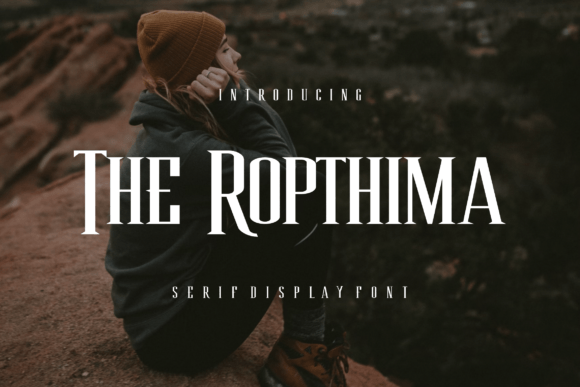
The Ropthima Serif Font for Handmade Brands
If you’ve ever spent hours tweaking a label, re-cutting vinyl because the letters didn’t hold up on your Cricut, or watched a client’s wedding invitation lose its warmth in print — you know how much hinges on one thoughtful choice: the right font. That’s why I was instantly drawn to The Ropthima. It’s not just another modern display font — it’s a serif typeface with grounded confidence, quiet elegance, and real craft-friendly clarity.
The Ropthima stands out with its bold yet balanced letterforms. Think sturdy serifs that don’t shout, generous x-heights that keep readability high even at small sizes, and subtle contrast between thick and thin strokes that adds authenticity without sacrificing legibility. It feels both contemporary and time-honored — like a well-worn leather journal paired with clean linen stationery. As a maker who designs printable wall art, boutique tags, and seasonal SVG bundles, I need fonts that look handmade *and* hold up commercially. The Ropthima delivers exactly that.
Where The Ropthima Shines in Physical & Printable Products
This serif font is built for impact — but not at the expense of function. Here’s where it truly earns its place in my design toolkit:
- Candle and soap labels: Its bold presence reads clearly on 1.5" round stickers and holds up beautifully when foil-stamped or printed on kraft paper.
- Wedding welcome boards and escort cards: The Ropthima brings warmth and intentionality — perfect for “Welcome to Our Day” or monogrammed initials beside floral motifs.
- Farmhouse-style signs and wall art: Paired with neutral wood tones or matte black frames, it grounds rustic designs without looking stiff or dated.
- Digital printables: Planner headers, habit trackers, and quote pages gain instant sophistication — customers consistently tell me these feel “premium,” not generic.
- Product packaging and hang tags: Whether it’s a ceramic mug label or a cotton tote tag, The Ropthima conveys care and craftsmanship — not mass production.
- Holiday and seasonal collections: From “Gather & Give” holiday cards to “Sunshine & Sprinkles” birthday bundles, its friendly authority makes festive messaging feel sincere.
Readability Matters — Especially When You’re Cutting, Printing, or Selling
I tested The Ropthima across multiple workflows: Silhouette Studio (with auto-trace), Cricut Design Space (at 8pt and 14pt), and direct PDF printouts for greeting cards. At 10pt and above, it remains crisp and fully legible — even on textured cardstock or matte sticker paper. For vinyl cutting, I recommend avoiding sub-8pt usage unless you’re using a high-resolution plotter and smooth transfer tape; the serifs stay defined, but spacing tightens. On mockups? It looks stunning — especially in lifestyle shots where typography becomes part of the product story.
It’s designed as a display font, so use it best for headlines, names, titles, and short phrases — not long paragraphs. That said, its open counters and consistent stroke weight make it surprisingly versatile for medium-length text like shop banners (“Hand-Poured • Small Batch • Made With Care”) or ingredient lists on apothecary jars.
Smart Pairings That Elevate Your Brand Identity
Like any great serif font, The Ropthima loves company — especially when paired intentionally. My go-to combos:
- A warm script font for names or greetings (e.g., “Emma & James” in a delicate handwritten style, followed by “October 12, 2024” in The Ropthima) — creates hierarchy and emotional resonance.
- A clean sans serif font (like Montserrat or Inter) for body copy, pricing, or fine print — lets The Ropthima anchor the visual voice while keeping information scannable.
- A simple, classic serif font (think Playfair Display or Lora) for layered typographic depth — ideal for luxury stationery or boutique packaging where tonal consistency matters.
No swashes or ligatures are listed in the current release — which I actually appreciate. It keeps file sizes lean, avoids rendering hiccups in older design software, and ensures predictable output across platforms. The font includes standard OpenType features, supports Latin-based languages, and ships in both .OTF and .TTF formats — ready for Canva, Affinity, Adobe apps, and cutting machine software alike.
Licensing That Supports Your Business — Not Limits It
As a small shop owner selling physical goods, digital downloads, and custom client work, I pay close attention to licensing. The Ropthima comes with a commercial license that covers all the essentials: printing on merchandise (mugs, shirts, totes), embedding in SVG files for crafters, bundling into Canva templates, and using in client branding projects. No hidden caps on units sold or annual revenue thresholds — just straightforward, scalable rights. That peace of mind means I can confidently build entire product lines around this typeface, knowing it grows with my shop.
What makes The Ropthima more than just a pretty face is how it quietly strengthens brand recognition. Customers start to associate that confident serif rhythm with your shop’s aesthetic — whether it’s on a lavender-scented candle jar, a printable gratitude journal cover, or a chalkboard-style café sign. It doesn’t distract. It invites. And in handmade markets, that subtle trust-building is everything.
If you're selecting a new serif font for your next collection, ask yourself: Does it feel like *my* brand? Will it cut cleanly? Will it print warmly? Will it scale across stickers, signage, and social previews without losing its soul? With The Ropthima, the answer is yes — every time.